Tuesday, March 4, 2014

Technology Trends in Supply Chain

2D Barcodes
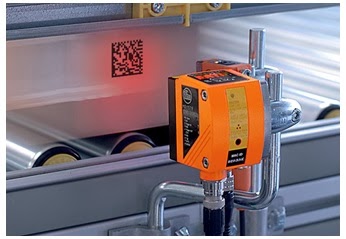
As the size of the organizations increase, the number of items flowing in the supply chain of organizations also increases rapidly. To track these items simple barcodes will no longer be sufficient as the information required to track them is a lot. So the organizations are starting to shift to a 2D barcode system which will allow them to record several thousand bytes of data which is way much more information than the traditional barcodes can. They are also called as Matrix codes. They are being used in item management, traceability and other operations. Improvements in auto focusing imaging technology allow for barcodes to be read from as far as 50 feet away and even in the dark.

One example of 2D barcodes is they are used in pharmaceutical industry to track the counterfeit and recalled drugs and generally to improve traceability of the drugs.


Bar code Scanner
Social Media
Social Media becoming increasingly important in supply chains year after year. This is making the supply chains greatly efficient. Social networks provide a wealth of data which can be used all over the supply chain. These sites can be used gauge the customer and market sentiments and plan the supply chain accordingly. For example the customers’ satisfaction with a product can be gauged from social media and based on that the demand can be forecasted more accurately and the inventory can be restocked accordingly. A lot of new social network websites like http://chain.co/ are being introduced just for organizations to communicate with each other and these are being used by the partners in the supply chain to communicate and keep tabs on the supply chain. A lot of existing ERP and other supply chain management software have been integrated with social networks to communicate information quicker.

DHL are involved in a new project called ‘MyWays’ which is an innovative way of performing the last mile of delivery. They use the crowd of people to deliver to customers where and when they want. This allows people to deliver packages to customers whose package is to be delivered to a location which is along the same route they are taking. This is revolutionizing how the last mile delivery is being done.

3D Printing
3D printing is a huge technological innovation. It is set to have a massive impact on the supply chains as well. This will reduce the complexity of the supply chain and help in reducing a lot of the costs involved in logistics and other parts of the supply chain. This also allows to easily customize the products based on the customers’ preferences. 3D printing has a huge advantage as it produces very little wastage as the items are created by adding materials instead of subtracting them. This has great scope to be used in the lean manufacturing industry. The time taken to produce items is a lot, so sing 3D printers to mass produce the items is not set to happen in the immediate future. For the time being 3D printing can only be used in the supply chains in case of emergencies.

References:

How are Current Trends in Technology affecting the Supply Chain Industry?

The supply chain industry is still not mature when it comes to the level of technology used. Many technologies are available in the market for better managing supply chains, and they are slowly being adopted. Nevertheless, there is a certain trend about certain technologies that are increasingly being adopted by the relatively more technology-focused firms.

One of the most prominent trend is moving towards Cloud technology, such as SaaS TMS. Giants in the logistics service providers, such as FedEx and UPS, are slowly moving their infrastructure to cloud, out of their own premises. There has been some resistance towards moving Big Data on Cloud, but the industry seems keen on taking full advantage of the cloud-based infrastructure, offered by the industry leaders, such as Microsoft and Amazon.

Smaller companies in the logistics industry have up till now not been able to afford a world-class Transport Management Solution (TMS) solution, because of the high cost of the software and the organizational complementarities, i.e. the infrastructure, that would have been required for the software to work. However, even these smaller companies are now moving towards software service-based TMS systems. Many technology companies are able to provide such cheaper alternatives to smaller companies, often in forms of business-to-business (B2B) software services.

Another big trend is being seen in Mobile technology. All big logistics providers are trying to provide their customers with different facilities through mobile capabilities. Through the technology they enable customers to, for instance, request a code on their mobile, then book a shipment online, and track it, as well as get alerts as the shipment moves from its origin to its destination.

Mobile technology is very useful for field staff - it allows them to get hands-on information on the inventory, load capacities or truck positions. It evens allows to mobile orders whilst they are talking to customers on the fly. Enterprise mobility in this sense can bring significant cost-savings and efficiency in the supply chain industry.


The third biggest trend is being seen in Business Intelligence (BI) – an area that has gotten very mature in the last few years. The technology takes a step further in taking the function of softwares from reporting on, e.g. sales or the number of shipments booked, to giving action-oriented information that can be used for strategic decision-making. For a transport and logistics provider, BI can provide information on the best modes of transportation available with different carriers, or the company’s top ten clients who have booked through these modes of transportation. It even provides real-time data that be visually presented through graphs. BI is helping businesses improve, reduce costs and increase efficiency. The supply chain industry produces huge amounts of data, and until now, it had proven extremely difficult to analyze them. 

If you are a CEO of a transport and logistics company, then you need to examine the trends that are going to affect the industry, and how you can benefit from it. 

Monday, March 3, 2014

"Cloud" in improving global supply chain management

Supply chain in the context of global economy has faced more and severe challenges due to the increased complexity of the supply chain networkSupply chain management is on the way to find their way that enables more efficient means of collaboration, communication, shared risk and orchestration. 
The technology trend that is occurring in the field of supply chain, according to Intermec Technologies Corporation, are:
1. Comprehensive connectivity – from 802.11 wireless LAN technologies, cellular networks, Bluetooth
2. Voice and GPS communication integrated into rugged computers
3. Speech recognition
4. Digital imaging
5. Portable printing
6. 2D & other bar coding advances
7. RFID
8. RTLS
9. Remote management

10. Wireless and device security

The NO.1 technology change is the comprehensive connectivity, which is aimed to enhance the collaboration among the supply chain networks.

The video from the GT Nexus, which is a technology company in supply chain management, talks about the application of "cloud" technology in the field of supply chain. The benefit of "cloud" compared to previous software systems in supply chain such as ERP. The application aspect and successful cases that deployed the "cloud" in supply chain.
https://www.youtube.com/watch?v=sxD_GZawinw

A study done by SCM World have researched the aspects that cloud computing can improve the supply chain performences with some empirical evidences. 
The points include:
Sales & Operations Planning (S&OP), Transportation Management Systems (TMS), Spare Parts Management and Store Shelf Optimization are the four supply chain strategies that are the most cloud-friendly and have the greatest potential to deliver the network effect throughout a supply chain.
Cloud computing adoption in supply chains is heavily dependent on the legacy ERP systems in place, as they provide the system of record corporate-wide.
Companies continue to lean on their IT departments to do more with less.
Only 12% of enterprises have “extensive” communications with their network, while over a quarter are still relying on emails, phone calls and faxes.
The majority of suppliers (60%) have a moderate level of collaborative execution with Electronic Data Interchange (EDI) and other automatic/scheduled communications being commonplace.
On-boarding new trade partners continues to be problematic for the majority of supply chain organizations with less than 30% of a recent survey of 374 respondents claiming they had no problems  “connecting or on-boarding new trade partners.”  
46% of respondents report that greater supply chain collaboration leads to problems being solved twice as fast.  

From the views above, Cloud is an effective technology to be applied in supply chain management through enhance the information flow among each link of supply chain, increase visibility and a better collaboration between different partners. 

The concern which the cloud may put threat on supply chain management is the security of information on which the cloud computing is based. Will the large information and data being moved into cloud create risk on the security of information? 

reference:
http://www.mirnah.com/images/White_Papers/Trends_SupplyChain/Top10Tech_wp.pdf
http://www.forbes.com/sites/louiscolumbus/2014/02/12/where-cloud-computing-is-improving-supply-chain-performance-lessons-learned-from-scm-world/
https://www.youtube.com/watch?v=sxD_GZawinw

Sunday, March 2, 2014

Google’s contribution to Supply Chain Management


Think technology, think what? “Google” is one of the names that appears at the top of our list of organizations that revolutionized the industry in a number of ways. Starting from its name till its communication portals every single effort has been to make data visible to its end customer. It believes in the power of being endowed with knowledge and information. With that as the broader goal the company has modernized every sector through diverse products with the wings of technology and innovation.


Google Glass is one of those products that has created a stir in the market even before its full-scale launch. It is a wearable device quoted at $1500 and projects GPS intelligent customized data 15 cm from the user’s eye. Much discussion has been on the rounds on it being a good or bad consumer electronic device. But industry experts have started to see its benefits as a valuable tool in the manufacturing industry.  It is predicted that a decade from now Google Glass would be used in every industrial unit by supply chain managers as a wearable device. With manufacturing units being ten times the size of football fields, despite the innovation in warehousing and distribution channels there is a constant need for supply chain employees to get a continued sense of the goods around them and what is happening to them. This keeps them updated and helps them make decisions on the fly.

A cool example provided by one of the experts is the case when a unit manager notices an intermediary product and wants to track the shipment status or the location within a warehouse. He/she can give a verbal command and have the results displayed right in the front. Further, supply chain queries like bar code/QR code scanning and inventory checks can be performed on the fly. This revolutionizes the modus operandi and contributes to efficiency.

Employees will be able to share real time data with cross-functionally and on a higher level organizations will be able to communicate with their suppliers and partners. This many times removes the requirement of current world communication portals like smartphones, email systems and also reduces the complexity of analyzing data sets using ERP systems, thereby serving as a great complement within the chain.

Some of the possible outcomes of this are: improved sales processes, cloud integration to enable wide data access, enhanced accuracy of everyday tasks and hands free working in industrial plants. On a higher level, Google Glass will be improving and integrating B2B processes through seamless flow of processed real-time information. This translates to reduced costs, enhances product quality and raises the bar for customer loyalty within the competitive market. The overall system may be transformed as results of Google Glass specific applications that would cater to different user needs in a single platform.

Google Glass has such a potential to have a personalized, deep and wide thrust within the industry which both supply chain operators as well as marketers need to realize quickly in order to be a pioneer in leveraging this technology for their pressing needs. It supports the growing trend of passive data consumption and user behavior prediction and Google plans to grow its capacity using humanoid bots as a parallel operating system that will make observe and suggest intelligent information.

The growth of technologies to enhance processes and daily lives has been so rapid. Do industries and organizations have the same velocity to adapt these trends and give up the legacy systems behind? Cloud computing took 10 years to become an established resource within the industry. Will Google Glass take a similar timeframe? Is the industry held back more because of cultural and political reasons rather than because of technological reasons ?

References & Readings:


Nike’s Failure in Adopting Supply Chain Information System (2001)


In the 1970s, retailers would have to place orders with Nike 9 months in advance before the delivery date. The company was able to manage to deliver their products on time. However, during the 1980s and 1990s, Nike’s business expanded rapidly, leading to the complexity of its supply chain. In 1999, its profits decreased by 50% because of challenges in managing the supply chain.

Nike decided to adopt a supply chain management system from i2, a major competitor in the field of ERP systems. By 2001, Nike had installed the system, with the cost of $400 million. However, the system failed. Demand forecasting was one of the biggest issues. Demand for a number of products and locations was either overestimated or underestimated. The company reported a loss of $100 million in sales in the 3rd quarter of 2001 due to this problem.

So, what was wrong?

Nike requested i2 to modify the standard software in a rush. The company wanted to forecast demand by style, colour and size, etc. This led to the fact that thousands of forecasts needed to be made very quickly to respond to consumer preferences and the market. Nike needed the customisation of the software to be done soon, so the reprogramming was done in a hurry. The system was able to run but with bugs, causing errors.

Nike used both “pilot approach” and “plunge approach” in the adoption of the system. One the one hand, the company wanted to adopt an i2’s product, instead of using existing SAP solutions, to see if i2 was better. On the other hand, Nike plunge the whole business operation into the new system, instead of step-by-step and part-by part integration. This mixed approach was part of the failure.

Sources:


SCM and the Challenges Ahead

-          Alan Watts

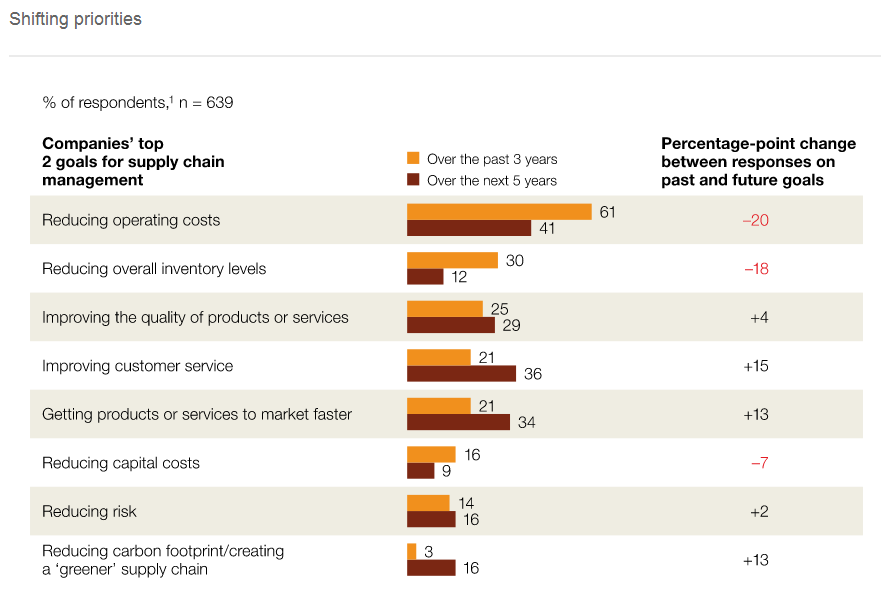
Rising pressure from globalization and competition, high consumer expectations, and increasingly complex patterns of customer demand are some of the challenges almost every organization face. According to a survey conducted by McKinsey, around 66 % of the organizations expect supply chain risk to increase in the upcoming years. A highlighting issue that has come up as a part of this survey is the kind of rough path and the struggles associated with the processes and capabilities of the supply chain management. An insight to the challenges which will be confronted by the organizations in the world is discussed below:

Emergence from the Economic Downturn

From the history of the market in the past few years, the major concern for all the companies was monetary constraints. The volatility of customer demand as a result of financial crises affected the markets across the globe. However for the upcoming years, globalization and environmental concern remains as one of the top priority for a huge number of organizations. The share that identify environmental concerns as a top challenge in the next five years nearly doubled, to 21 percent. This is also a form of indication that the companies are emerging from the economic downturn and financial affairs are not the only source of concerns. The companies are returning to a normal mode of operation with new types of challenges ahead.


Shifting priority

Majority of the companies are meeting the goals and targets they set for themselves as a result of improved efficiency and performance. Nearly 50 % of the companies who participated in the McKinsey survey assert that their companies’ service levels are higher now than they were three years ago, 39 % say costs as a percentage of sales are lower, and 45 % have better managed inventories.
Even after all these improvements the matter of concern is the amount of supply chain risks. More than 66 % of the companies believe that the risk increased in the past three years, they dealt with it but nearly the same amount of risk will continue to rise. So there is a continuous shift in the priorities of customers which in turn is creating a whole new set of risks for the market.


Managing challenges and trade-offs

While the business conditions in the next few years seem favorable from the strategic goals set by the executives, the company as a whole is not entirely ready to adapt to the challenges. The small and the large companies are on the same page when we talk about readiness to face the challenges. However, one good news is that the three major challenges namely global competition, rising consumer expectations, and complex patterns of customer demand; a majority of the organizations are prepared to meet these challenges. The problem arises due to lesser involvement of the executives. They fail to understand the functional trade-offs related to these challenges and assumes that their companies are ready to face them. 

The Fragmented Processes

Around 31% - 40% of the participating firms face the issue that their operations teams and sales team are never on the same platform or that they never meet to discuss the strategies and issues related to the supply chain. Similarly there are many more processes within the firms which are not collaborated well with the others. 23% of the firms cite problem between their IT and manufacturing, and 21 % between manufacturing and planning. This fragmentation is likely exacerbated by the lower levels of CEO involvement. Majority of the CEOs do not actively develop supply chain strategy or work hands-on to execute it. To avoid cross functional disconnections, a higher level of CEO involvement will turn out to be promising in resolving this issue.

Leveraging the Information

In the world of Big Data and Predictive Analysis, some companies fail to collect and connect enough data in making wise decisions related to supply chain. For example, customer service is becoming a higher priority, and executives say their companies balance service and cost to serve effectively, yet companies are most likely to take a one-size-fits-all approach when defining and managing service-level targets. On the other hand while some of the companies use user data to enhance customer experience, they have mediocre information about incremental costs for raw materials, manufacturing capacity, and personnel.
While it is obvious that the supply chain challenges in future will require companies to keep and use information is more sophisticated ways, only 25% of the participating companies believe that they will invest in IT systems over the next five years, and only 10 % of respondents say their companies currently use social media to identify customers’ service needs.


REFERENCES:

[1] http://www.mckinsey.com/insights/operations/the_challenges_ahead_for_supply_chains_mckinsey_global_survey_results
[2] https://supply-chain.org/top-supply-chain-challenges
[3] http://online.wsj.com/news/articles/SB10001424052702304549504579318120467741330

Visibility: An Answer to the Challenges faced by Healthcare

The global medical industry, with a turnover of over $ 4.5 trillion, is one of the world's largest and fastest growing industries. Some of the common segments of this industry are; Medical equipment and supplies, Pharmaceutical, Healthcare services, Alternative medicine sectors.
Given the size and importance of this industry, the supply chain in the healthcare industry is proportionally complex. The gist of the supply chain process still remains the similar to other industries; starting from purchase of raw materials and ingredients, formulation and packaging of dosages, shipment from manufacturing units to warehouses to retailers using logistics, finally making it to medical institutions and patients. But the healthcare industry has a number of factors affecting its supply chain. [1]
  1. Competition and Globalization leading to shrunk margins.
  2. Fraudulent and counterfeit products.
  3. Stringent regulatory rules.
  4. Increased cost of research, development and production.
  5. Growth in usage of medication.
  6. Packaging and labelling requirements driven by retailers.
  7. The “Patent to Patient” supply chain process.

Along with managing inventory and beating costs, pharmaceutical industry has to address the above issues to be successful. Meeting the compliance and regulations just add to the problem.


The Need for Visibility:

Increasing the visibility in healthcare can definitely help the medicine industry solve a lot of the above mentioned issues. Not having enough visibility e.g. not knowing the route by which pharmaceutical products make it into the hands of the customers can lead to fraudulent products. As per FDA regulations, these life science companies need to keep a track of the product information such as historical locations; time spent at each location, packaging configurations, and storage conditions. This is done to maintain the lifecycle of medical products in the supply chain effectively and safely. Major drivers for visibility in healthcare include the need to:

1.   Meet Pedigree Requirements - A drug pedigree identifies each point of sale, purchase, or trade of a drug, including other details like the date of transactions, the names and addresses of all parties etc.

2.  Manage Product Recalls – A product recall is a request to return an entire batch of product due to identified safety issues. With every recall, there are 2 ways that any drug company suffers: once in terms of logistics effort and second in terms of losing consumer confidence. To address this issues, there is a dire need of better monitoring of the supply chain process in the healthcare industry.

3.   Counterfeiting in the supply chain – Another major problem faced by any drug company is counterfeiting. Proper visibility to from origin and ownership of products could immensely help in preventing fake drugs from reaching the markets.

4.  Deal with offshore manufacturing quality – To increase profits and survive in the competitive market of medicines, companies head off shore to manufacture products. This process is also enabled by the introduction of a number of generic drugs. Maintaining a standard production effort and adhering to six sigma becomes difficult in such a case.

To comply with the rules and regulations, and to ensure quality of data in the pharmaceutical industry, healthcare companies are looking towards visibility to address the challenges while maintaining quality and safety.
Track-and-Trace technology is believed to enable efficiency of operation, improved visibility of product, faster returns, lower product recall an increased safety.

How can Visibility be Achieved / Deployed?

The simplest and easiest ways to increase the visibility in the supply chain is by the use of Auto-ID/RFID/Bar Code. These can help mitigate the risks involved in pedigree maintenance. The products can be tagged with one of these during packaging. This will eventually make products trackable, traceable and recallable whenever required. 
Another way to achieve better visibility would be through better integration of the various technological aspects of the drug manufacturing. Healthcare organizations in general have fragmented IT which makes it difficult to manage and utilize the information. Hence, technology adoption in better ways can also have a huge impact in achieving visibility. To adopt technology, which would involve cost, time, resources and political constraints, healthcare firms should make a judicious choice and then embark on their technological journey.

REFERENCES:

[1] http://www.hhmglobal.com/knowledge-bank/articles/supply-chain-visibility-in-healthcare-beyond-the-dashboard

[2] http://en.wikipedia.org/wiki/Product_recall

Saturday, March 1, 2014

THE RIGHT TRACK TO SUPPLY CHAIN MANAGEMENT- CRM INTERGRATION

The Role of Technology and the Web on Global Supply Chains is the central theme of this week. The intention is to explore the application of information technology in a supply chain management system including how the information technology transforms traditional businesses, the complexity and problems caused by enterprise software. Additionally in this week, we walked around the cloud computing as the answer to chain woes and how beneficial it is to strengthen the network for online market. In relation to this week reading I decided to explore on the Customers Relationship Management Software as the right path to supply chain basing on the advancement of technology.

Introduction of Software Solutions to the World Market and Supply Chain
During early 1990s the world observed rapid increase of the number and varieties of software categories aimed at the business firms. This was due to advances and growing trends of information, process as well as communication technologies mostly related to internet. This transformed the way the businesses were operated toward their expansion. This development in technology could not leave behind the area of Supply Chain Management which is much cantered on a complex chain of processes including coordinating supply and demand.

On the supply side, Supply Chain Management (SCM) systems may employ enterprise resource planning (ERP) software to boost enterprise efficiency, improve decision-making by providing greater visibility into operations, and promote collaboration via information sharing. On the demand side, Customer Relationship Management (CRM) offers the opportunity to gain more information in real time about current and prospective customers, providing functionality for contact management, sales force automation, and customer service.

Early Hurdles
Earlier, most of the business firms’ anticipation was very highly placed on the investment on the Supply Chain Management and Customer Relationship Management software solutions. However, SCM and CRM software solutions delivered at least partially to some of the firms’ anticipation and to most of the business firms the results were far less than anticipated despite significant investments in these resources. The reason behind was that most companies were not prepared for the implementation difficulties.

During the first wave of their infusion into businesses, in which individual SCM and/or CRM software modules were generally treated as separate installations, the integration with existing legacy systems proved most troublesome. The Standish Group reported that the average cost overrun was 178 percent of budget; and the implementation schedules exceed 230 percent of plan[i]. Estimates of implementation failures of CRM ranged from 55 – 75 percent according to the Meta Group[ii]. From a survey of 162 senior managers conducted by Bain and Co.[iii], researchers concluded that SCM which was long touted as an avenue to control costs, reduce risks, and increase service performance was mismanaged by most companies.

The Value of Supply Chain Management Solutions
Many companies discovered that the advancement of information, process and communication technologies and hence progress made on the CRM software solutions allowed them to concurrently reduce costs as well as enjoy the competitive advantages in different markets through better management of their supply chain networks.


          Source:http://annanagurney.blogspot.com.au/2012/01/how-us-can-compete-and-win-in-global.html

SCM is an approach to managing a complex range of business activities that are associated with the coordination of supply network entities, channels, and resources for the effective delivery of value-added products and services to customers. At the heart of SCM is the optimization of material, information, financial and service flows through a supply network to effectively coordinate business activities that are geographically dispersed.

It is well known that SCM focuses on the operational and strategic processes of the entire network of business entities that transform inputs (e.g., raw materials and information) into value-added, finished products and services for end customers, it enables firms to integrate, leverage, and monitor the continual flows throughout the chain. In addition SCM enables knowledge flows among business entities[iv]; and opportunities for global marketplaces, including emerging markets[v].

The Value of CRM Solutions
In today’s world the key assets to most of the business is customers, this new view of the firms require a right portfolio of the right customers. The portfolio of right customers enables the business to develop and maintain relationships with these customers as well as to manage the portfolio effectively and efficiently.

Thus the fundamental principle of CRM is to leverage customer data to build profitable relationships by optimizing the value delivered to and realized from each customer. CRM is not a technology, but it is made possible by technology that allows a business to integrate, analyze, and act upon large volumes of customer data. Successful CRM applications must start with a business strategy, which in turn drives changes in business processes that are made possible by information technology.

Businesses are increasingly realizing that a 360° view of the customer with all customer-related data in a single data warehouse is a key factor for enterprise-wide CRM success. This 360 view of the customer consolidates all bits of information about the customer, including purchases, channel preferences, demographic and psychographic data, payment history, marketing contacts, service records, complaints or inquiries, and other communications with the company as shown on the figure below.

         A single 360° view of the customer integrates all customer information[vi]
Where Does CRM Provide Value?
CRM is prevalent across many industries, but has been most aggressively adopted in the financial and services sectors, including banks, credit cards, airlines, hotels, and retailers. CRM solutions are typically split into two areas: operational CRM and analytical CRM. Operational CRM includes the customer-facing applications that focus on managing customer interactions. Analytical CRM supports and aids decision-making with a range of tools from simple spreadsheet analyses to sophisticated data mining. Operational CRM and analytical CRM support each other in a feedback loop[vii]. Operational CRM captures critical data for input into analytical analyses. Insights into customers' behaviors obtained from analytical CRM are then tied into operational CRM solutions. The most common CRM applications focus on sales, marketing, or customer service processes.
  • Sales force automation (SFA):
Regarded as the foundation of CRM tools[viii], sales force automation is designed to help salespeople acquire and retain customers, and manage their accounts. Key components of SFA solutions include lead distribution and tracking, contact management, sales process management, pipeline management, sales forecasting tools, and automated generation of quotes and orders.
  • Customer interaction center applications:
The most prevalent of the applications focusing on customer service and support are call center applications, which aid call routing and assignment, queue management, call tracking, entitlement processing, problem resolution, and performance measurement.
  • Marketing automation:
Marketing automation uses information technology to automate the marketing process and get the right message to the right person at the right time using the right media. Marketing automation encompasses analytics to segment customers and target campaigns, campaign management to execute marketing campaigns including personalization, and detailed response tracking.
Benefits of CRM
New classes of customer-centric metrics are used to measure and monitor CRM initiatives. These include customer profitability and lifetime value, share of customer or share of wallet, retention or attrition rates, customer satisfaction, loyalty, up-sell and cross-sell rates, and cost to serve. Common benefits of successful customer relationship management initiatives include the following:
  • Increased revenues:
A larger share of customer wallet and increased revenues can result from increased usage or purchases of the products and services customers already use or increased revenues from sales of additional or higher-margin products and services. Additionally, satisfied loyal customers may be less-price sensitive, so fewer price promotions are needed to drive sales.
  • Improved customer loyalty and retention:
Satisfied customers often stay longer, are less likely to churn, are less likely to consider taking their business elsewhere, and more likely to generate referrals of desirable new prospects. These result in a reduced need to solicit new customers and lower new customer recruiting costs.
  • Reduced costs of serving customers: 
Predictive modeling to better target marketing communications can produce significant reductions in unproductive advertising and marketing campaign costs. Initiatives to move customers from higher cost (e.g., phone) to lower cost (e.g., Internet) channels can realize significant cost savings.
  • Improved resource allocation: 
Knowing which customers are highly profitable, which are marginally profitable, which are unprofitable, and which have upside profit potential allows firms to better to allocate marketing and customer service resources.
  • Improved product portfolio: 
Through capture and analysis of interactive customer feedback, the portfolio of products can be better tailored to customers' needs and desires.

Bottom line results achieved from CRM initiatives vary widely depending, in large part, on how well the people-process-technology triangle is implemented.
Challenges of Implementing and Integrating CRM and SCM Solutions[ix]

Choosing the right path for any organization requires making short-term and long-term trade-offs. As companies move toward higher levels of integration, most will be hard pressed to keep their home grown or bolt-on solutions current. The pace of technological change is dizzying.

Though the potential benefits of fully integrated CRM and SCM solutions are great, the challenges can be formidable and success is not automatic. Despite the promise, statistics show that many CRM - SCM implementations failed to achieve their business goals. Beyond the matching of maturity elements, the common pitfalls among the failures includes but not limited to non-integrated business and technology strategy, inconsistent top management support, lack of trust, and inadequate understanding of technology. In order to overcome these bottlenecks the firms should embark the pitfalls into promise by:
  • Building a strong business case:
The system is only as good as the business strategy that it supports. Successful SCM and CRM solutions require a sound underlying business case coupled with metrics to measure and monitor the results. This business strategy must be clearly articulated and communicated to all stakeholders.
  • Securing management support and commitment:
SCM and CRM solutions reflect a business approach that extends far beyond mere technology tools. Successful implementation requires the involvement of and commitment from personnel spanning sales and marketing, operations, and information technology. Support and commitment from the top help ensure that all are aligned and working towards the same objectives. The CEO and the team should 'own' the implementation. Once implemented, the integration is a key strategic tool around which critical business decisions are to be made - and this should not be relegated to technical experts.
  • Building communication and trust:
In corporate politics, information is power and this can result in an environment in which information is not shared. Successful integration of SCM and CRM solutions requires the sharing of information across the organization, and potentially with partner organizations as well. Build teams and constantly share expectations and lessons learned.
  • Developing an understanding of the technologies:
Although technology is just one component of the solution, it is vital to its overall success. Factors such as scalability, integration, and functionality need to be considered up-front. Inherent capabilities of the technologies should be understood in advance.

Conclusion
In today’s world it is inevitable for the business firms to successful concur the market without investing massively and prudently in the Technology and Web based solutions to ensure that these business firms operate effectively and efficiently the Global Supply Chains. However, a careful consideration should be in place so as to understand the right time for implementing the right technology with the right investment strategies. Once these are taken into consideration there is likely chance for the firms to emerge on top of the market competition when fully utilize the benefit and competitive advantage of Right Technology for Global Supply Chains.


[i] Standish Group.(1995). Chaos Report, Standish Research Paper. Retrieved July 5, 2007, from http://www.projectsmart.co.uk/docs/chaos-report.pdf.

[ii] J. Johnson,(2004). Making CRM Technology Work. British Journal of Administrative Management, 39, 22–23.

[iii] M., & Cook,R. Hagey,(2003). Why Companies flunk supply supply-chain 101: Only 33 percent correctly measure supply-chain performance; few use the right incentives. Journal of Business Strategy, 24(4), 35–42.

[iv] D., & E. Rosenzweig,A.V. Roth,(2007). B2B Seller Competence: Construct Development and Measurement Using an Operations Strategy Lens.Journal of Operations Management, 25(6), 1311–1331.

[v] X., Zhao,B., & Flynn,A.V. Roth,(2007). Decision Science Research in China: Current Status, Opportunities and Propositions for Research in Supply Chain Management, Logistics, and Quality Management. Decision Sciences, 38(1), 39–80.

[vi] D. Gupta, Jatinder N., Sushil K. Sharma, and Mohammad A. Rashid (eds). Handbook of Research on Enterprise Systems.IGI Global. © 2009.

[vii] O. J. Chan,(2005). Towards a Unified View of Customer Relationship Management. The Journal of American Academy of Business, 6(1), 32–38.

[viii] F. D. Ross,(2005). E-CRM from a Supply Chain Management Perspective. Information Systems Management, 22(1), 37–44.
[ix] D. Gupta, Jatinder N., Sushil K. Sharma, and Mohammad A. Rashid (eds). Handbook of Research on Enterprise Systems.IGI Global. © 2009.