Showing posts with label apple. Show all posts

Friday, September 21, 2012

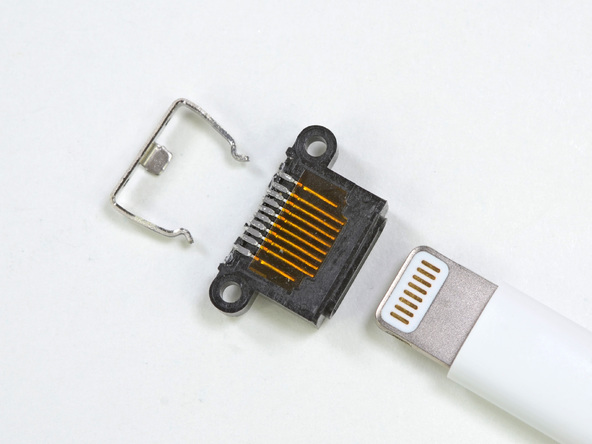
Apple iPhone 5 Teardown


(gratuitous interim post in celebration of Apple’s new toy. . .)


Source: http://www.ifixit.com/Guide/Image/meta/ipuKf63xOMIt3T1m
The fine folks at iFixit have published yet another skillful teardown, this time of the new Apple iPhone 5. Yes, they buy brand new and expensive computers and the like just to render them into their component parts . . . so they can figure out what it is going to take to repair them when they start to break. Go ahead, follow the link. Their teardowns are filled with thoughtful (and pithy) editorial commentary on reparability, and also frequently their surmise on design, construction and sourcing philosophy.

Granting that we have all seen the results of skillful and expert teardowns first hand in class, this might be a bit anticlimactic, but it is well worth a look anyhow.

From the sourcing side, I would encourage careful attention to the components, each of which is going to have a complex supply-chain story of its own.


Source: http://www.ifixit.com/Guide/Image/meta/6wSwQDSxsENkhPXC

Question:

Each of the components is a complex finished good in its own right. How many layers of iteration would you need to pursue, on average, for each of the components before you got back to raw materials?

Reference:
IFixit – “The free repair manual you can edit.”

Tuesday, February 14, 2012

What is the best way to manage your inventories?


iPad 2 line Wednesday at Apple's Fifth Avenue store.
Photos from reader Ric S. [1]

This week our topic is about inventory management in supply chain. It is well known that the inventory strategy is a key element to determine a company’s overall performance. For example, in the financial analysis, the inventory turnover ratio is vital to a potential investor to look at. Also, let’s take a look at the above picture. Does it look familiar to you? Have you ever stayed up at night in the freezing street only wishing to buy any Apple products before it sold out quickly? Have you ever made any complain and wish your Apply store to get more storage? Has it ever occurred to you that maybe Apple is using a special market strategy and limit its supply on purpose? Or, maybe Apple is facing some problem in their inventory control?

As we learned, a company can control its inventory in many ways, considering the location and distance from its customer, factory, or warehouse, the time period and speed of supplying and supplement, and the amount of supplement for each time, etc. Should I take more care of my key custom and assure their need? Should I take a just-in-time method to reduce cost or a just-in-case philosophy on the opposite? Where should I build my assemble center? How much is my cost for shipments? Those are all part of the questions for a manufacture to consider in order to making a right decision on their supply chain management.

What could go wrong if you applied a wrong strategy? How to identify the more important factor and make your decision? What are your benchmarks? Well, I guess it is not easy to answer these questions. However, we should always remember that in the market, on the other side of supply, there is another key factor— the demand, which unfortunately is changeable from time to time, though could be predict.

Back to Apple’s case, Apple is successful for its high amount of sales and quick inventory turnover rate. It used several ticks to keep their actual inventory and supply chain management as a myth.

For example, it changed its Web order number generating method to a random number so online order numbers have no relation to how many units have been sold. In this way, customers have no idea of the actual amount left and will be more desired to buy as quickly as possible. Thus, their bargaining power becomes low and Apple suppliers take the advantage to name their prices at the maximum profit. However, the popularity of its product is a two-side sword. Apple is now known (sometimes rumored) for facing supply chain bottlenecks. They find trouble keeping up with the high demand which causes too many complaints from its customer that some of them have already lost their loyalty.

Beside the influence of the market, the inventory strategy is also influence by polices in local assemble center. The law issues can particular influence a company’s situation in an extreme way.

As Apple is engaged in a number of patent battles globally against Samsung Electronics and HTC, including the markets in US, Germany and Australia, it is sweat to see that the final judgments are so far mostly been decided in favor of Apple. However, the recently China trademark lawsuit will certainly give Apple a hard time and make their inventory and supply problems even worse.


Source: http://www.gizchina.com [2]


Since late last year, Apple has been fighting a trademark infringement case against Proview Technology. It is claimed that Apple is infringing Proview’s trademark by using the iPad name in China. Apple thought it owned the trademark, but Proview Taiwan, a separate entity, sold the trademark for use of the name in China without permission. Apple has now lost the trademark case in China, and Chinese government officials have started seizing iPads from retailers as they are no longer allowed to be sold. [3]

As China is Apple’s main manufacture place for iPad, this could lead a worldwide shortage for Apple. It would also mean the expected launch of the iPad 3 next month couldn’t happen unless Apple already has a mass of stock outside of China. How should Apple survive from this? Despite there is still a chance for Apple to pay a large amount of money and settle the problem out of court, the current storage and the myth strategy of inventory for iPad3 worldwide seems to be more worthy to know.

Do you have any idea to assist Apple? Let's wait and see how Apple would response.


References:

[1] Hughes, Neil. "Apple Rethinks Inventory Management for IPad 2." AppleInsider | Apple News and Rumors since 1997. AppleInsider, 16 Mar. 2011. Web. 14 Feb. 2012. <http://www.appleinsider.com/articles/11/03/16/apple_rethinks_inventory_management_for_ipad_2.html>.

[2] "IPad Now Banned in China! | Gizchina.com." Giz China, Chinese Gadget Guide. Technology in China. IFeng, 13 Feb. 2012. Web. 14 Feb. 2012. <http://www.gizchina.com/2012/02/13/ipad-banned-china/>.
[3] Matthew Humphries. "Apple Facing IPad Export Ban in China, Could Lead to Worldwide Shortage – New Tech Gadgets & Electronic Devices." Geek.com. Financial Times, 14 Feb. 2012. Web. 14 Feb. 2012. <http://www.geek.com/articles/gadgets/apple-facing-ipad-export-ban-in-china-could-lead-to-worldwide-shortage-20120214/>.

Tuesday, February 7, 2012

The Battle of Green Supply Chain


  Green Supply Chain VS. Efficient Supply Chain

As I discussed in my first blog, efficient supply chain can reduce the cost in the chain effectively like the way IKEA has been implementing, for example. However, the world is evolving with the rise in concern about the polluted environment caused by human's work, precisely by companies and organizations which manufacture without taking environment protection into their account. Those companies and organizations are under very high pressure from the public, NGOs(non-government organizations) and the governments. It is a new challenge for other firms to make decision to adjust their non-friendly environmental supply chain system into friendly environmental system because of incurred and high switching cost.

In this case, I want to point out three examples of three different manufacturing companies which are trying to find their best solutions. This will help us to criticize the decision made by those three companies.

APPLE

 (Image source: http://www.themobilewallpapers.com/v/IPhone/Apple+Iphone+Dark+Mobile+Wallpapers+Apple+Black+Iphone+Backgrounds.jpg.html )

Everyone knows how excellent Apple's products are! The iPhone and the iPad are making a new trend in designing a mobile device. However behind the artistic design of Apple, they have faced many environmental issues from its suppliers. THE NEW YORK TIMES had an article on September 1st 2011, "Apple Cited as Adding to Pollution in China". The article revealed that:
"A Chinese environmental group has singled out Apple for criticism, accusing the company’s Chinese suppliers of discharging polluted waste and toxic metals into surrounding communities and threatening public health."
The group is Institute of Public and Environmental Affair in Beijing having a report which suspected that Apple supplier has “fail to properly dispose of hazardous waste. In addition, the working condition in the manufacturing factories were not up to the standard. The article also pointed:
"Also earlier this year, Apple acknowledged that 137 workers at a Chinese factory near the city of Suzhou had been seriously injured by a toxic chemical used in making the signature slick glass screens of the iPhone."
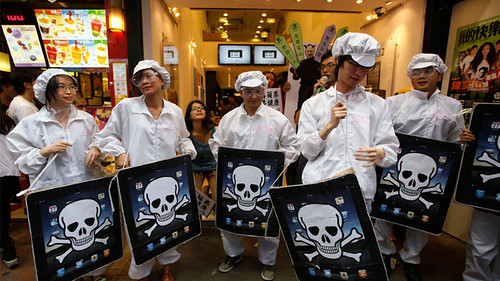
Demonstrator in Hong Kong protest against Apple on poisoning their workers.
(Image credit: AP Photo)

Even though Apple made a lot of efforts to explain that the company had been trying to audit regularly its suppliers, there is still a question for them to answer:  “So how do you fulfill your commitment if you do not consider that you have responsibility in your suppliers’ pollution?”, asked by Mr. Ma Jun, the director of the Institute of Public and Environmental Affair. This article gave us an interesting insight of the scenes behind very beautiful products from Apple, there were still a lot of ugly consequences which affected the environment.

ORGANIC COTTON MANUFACTURER


We have heard a lot about organic food, but we might rarely hear about organic cotton. Reason? The green organic cotton manufacturer is facing the problem that the price is on the high side. The production of organic clothing is not people imagination of so simple and easy. Firstly, the procurement of raw materials, to confirm that the purchase is organic cotton, is the very headache process. Most of the cotton farmers still use chemical fertilizers and pesticides. To solve the problem of the organic cotton raw material stock, the cost is high.

According to Lu Yuan organic clothing, company's chief executive Ba Song said: 
"Choose as a raw material, organic cotton production FuZhuangShang only in the yarn spending by 20%, which makes us into dilemma, either raise retail price, or sacrifice the profitability of products. Now buyers and sellers to price highly sensitive to any kind of choice will cause a party's interests are violated."
The green supply chain falls into a dilemma, where the cost is much higher while the profit of the business still needs to meet the expectation.


HERMAN MILLER

In the case study "Cradle-to-Cradle Design at Herman Miller: Moving Toward Environmental Sustainability", I found out that Herman Miller have discovered a way to make its business successful through green supply chain.
In 1991, members of the Environmental Health and Safety group drafted a series of guidelines called "Design for Environment" (DfE) in an effort to formalize environmental aspect of its design process.

As Drew Schramm, senior VP of Supply Chain Management stated:
"We don't make decisions that will put us at a disadvantage in the market. It doesn't do the world any good if we go out of business because we're nice guys. We want to be in business AND be nice guys"
Herman Miller has proved its right decision when choosing recyclable material and eliminating all material like PVC, for example, could become a toxic waste at the end of product useful life. It also forced its supplier to switch to follow the program to supply recycle materials.
Herman Miller is one of the most successful furniture companies in over the world. Inspired? Let's watch the following video to know more about Herman Miller.


Source:
<http://www.nytimes.com/2011/09/02/technology/apple-suppliers-causing-environmental-problems-chinese-group-says.html?_r=1>
<http://www.fsidoshow.com/EN/content/?61.html>
<http://www.youtube.com/watch?v=krhH_H7EaQg>