- To maximize the use of space inside shipping containers.
- It would lead to the
excellent way to reduce the shipping cost while IKEA could transport more items
in a single trip. (Based on “How Ikea Design Its Sexy Price Tags” by Lisa
Margonelli, the shipping cost could be reduced by 60%, which is a significant
savings)
Flat packaging maximize the use of space inside a container - To gain efficiency in the distribution network. IKEA has 28 distribution centers and 11 customer distribution centers in 16 countries. Anyone who manages transportation, for instance, will identify with the point Collins (a journalist from The New Yorker) makes about IKEA’s famously dense, no-waste packaging: “The company’s goal is to design products that can be packed as tightly as possible, minimizing damage and maximizing profit as they are transported over the oceans. Its motto: ‘We hate air.’”
- To cut cost because IKEA does not need to assemble all the products. It lets the customers do it by themselves.
- Most
interestingly, I also discovered by myself that broken-down packaging enables
IKEA to outsource globally and resourcefully. For example, based on Christopher
Sciacca’s story, when he bought his table and chair from IKEA, he found out
that the shelves were from Russia, the computer desk from Poland (pictured
below), the chairs from Thailand, the screws from China, and the carpet from
India.
“The point is, just like in outsourcing and services delivery, you go to where the talent and skills can be found or to complete my analogy you can get the best natural resources. And IKEA seems to have a very good understanding of that, because if they didn't they would be shipping everything out of China and Sweden, which would have a serious impact on quality and cost.”
(by Christopher Sciacca, from <http://supplychainsrock.blogspot.com.au/2008/03/ikea-and-supply-chain-super-hero.html> )
A collection of resources and commentary providing an introduction to supply chain management and related systems for students, practitioners, and anyone else interested in learning more about how to design, manufacture, transport, store, deliver, and manage products.
Thursday, February 2, 2012
IKEA’s intelligent packaging implies LEGO’s bricks
Mumbai's Dabbawalas Go Hi-Tech
http://www.rediff.com/money/2006/jun/26dabba.htm
http://www.sify.com/news/mumbai-s-dabbawalas-learn-english-use-of-computers-news-national-kjgrkejejha.html
How Should We Face the Phenomenon of “Double Standard” in Global SCM?
Agility, Adaptability and Alignment (The 3 As)

Agility is largely dependent on the speed of information flow in the supply chain. Mostly large companies have integrated supply chains from distributors to raw material suppliers. A well integrated supply chain is the key to attaining competitive advantage in recent times. One of the competitive advantages enjoyed by Dell include 90% of its supplies being ordered through online integrated websites of suppliers and Dell (B2B). Also, Alignment is necessary to improve coordination among supply chain partners. Approximately 95% of Dell's suppliers are situated very close to the assembly plant hence coordination is much easier.
An adaptive supply chain network is also dependent on real time integration. The sharing of critical business events, as they occur, among people and systems is the vital link to adaptive supply chains. This requires the implementation of an enterprise integration strategy that drives real-time integration across the supply chain portfolio. HP introduced its online e commerce channel in collaboration with FedEx. The challenge was to integrate HP's order management and inventory management system with FedEx. This eventually enabled FedEx to handle the logistics of products being shipped to HP's customers in US. FedEx had a comprehensive distribution network and was a prime choice for handling the distribution of HP's online sales.
Seven Eleven Stores are the largest convenience stores in Japan with $23.3 billion annual sales. Seven Eleven's agility is based on the following model.

Their Information system network is integrated using an ISDN network. It allows smooth flow of information among all players and makes their store more responsive to changes in demand.
Agility has also allowed companies to bring speedy NPI (New Product Introduction) with collaboration. In November and December 2005, Xbox launched Xbox 360 simultaneously in N America and Europe, beating Sony’s Playstation 3 by close to a year. Their effective collaboration with parts manufacturers and distributors allowed them to reduce their "time to market" compared to Sony.
In conclusion Agility, Adaptability and Alignment are winning strategies to counter challenges such as
- Increasing demand and supply uncertainities
- Shortening product and technology cycles
- Having multiple outsourced partners and aligning all their interests and needs.
REFERENCES
1. http://www.scmworld.com/blogpost/610997/131164/Supply-Chain-Enabled-NPI-through-Agility-and-Adaptability.html
2. http://www.slideshare.net/amit_kumar1/dell-supply-chain-presentation
3. supplychain.bizzreview.nl/portal/info-item/get-link.cmd/id=158/
4. http://www.slideshare.net/tung148/hp-supply-chain
The two sides of Apple’s Supply Chain
Wednesday, February 1, 2012
Shifts and Trends in Supply Chain
The supply chain has changed significantly in the last decade. Demand is changing due to new business model with global trends and market. Information Technology then creates the opportunities for companies to serve this new business needs.
The shift in business focus
There is a new shift from an individual company to a whole view of a supply chain, cross multi companies in the network. The old thoughts about supply chain are to fulfill the orders, in other words, to deliver the right products in the right time. However, this new shift has made an impact. Now, supply chain strategy involves from product design, introduction, promotion, fulfillment and recycling.
This trend has shifted the business focus to new things: from cross-functional department to cross-enterprise, from supply focus to demand focus, from single-company work to collaborative and concurrent works from different companies. One key of this shift is to change the focus of a business from cost reduction to best value creation for customers. This not only includes better customer service or product design but also tailored offerings and new business models to serve customers better.
Figure: The New Supply Chain Process
Source: The Supply-Chain Management Effect, Kopczak L., Johnson M.
Required Attributes for Companies
To make this shift successful, Ketchen, D 2008 (Best value supply chains: A key competitive weapon for the 21st century) analyzed that there are 4 aspects: speed, quality, cost and flexibility. The competition game between companies is to try to balance these 4 aspects to attempt for the best value supply chains. One critical example is the competition between K-Mart and Wal-Mart in the late 1990s. K-Mart tries to challenge Wal-Mart by a price competition but then it failed soon after that. Wal-Mart has a very powerful and sophisticated supply chain and logistics network that helps them to withstand the war and win K-Mart.
Moreover, there are some key concepts that managers in supply chain need to understand and apply successfully: agility, adaptability, alignment, strategic sourcing, logistics management, information system and relationship management. If the companies can make a good system with these attributes, the company can maintain a good supply chain network that offers the best value.
How it applies in reality
In reality, there are human and natural disasters that affect strongly these supply chain networks.
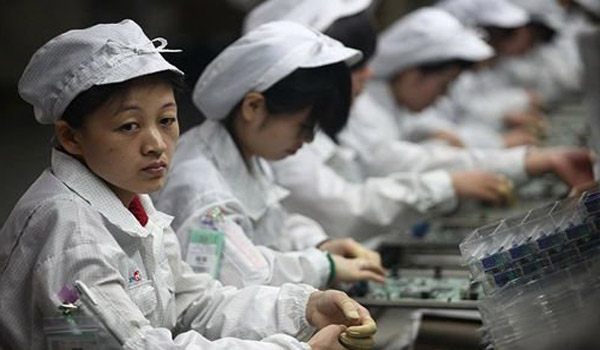
Figure: Chip Manufacturing in Japan
Source: http://www.spacedaily.com/images-lg/chip-tech-spix-lg.jpg
The latest earthquake and then nuclear disaster was an example. Right after these disaster happened in Japan, managers immediately go into the meeting room and consider what the impact can be in their supply chain.
Japan plays a vital role in the semiconductor industry, chips and lightweight flash memory used in smartphone and tablets. Therefore, the impacts on any company’s supply chain were big and there was no certainty when these Japanese factories reopened.
However, HP and Apple reacted quite quickly to the situation with their own big inventories that can help them survive for the short time. In the long time, they have switched the suppliers to their backup suppliers in some few days. This helps these companies to survive this “Global Stress Test”.
Herman Miller ahead of the curve, but at what cost?
I just finished reading the case study on Cradle-to-Cradle design at Herman Miller and it got me thinking not only about the appeal to the producer to apply these techniques, but also how to control waste throughout the supply chain.
What is the appeal of C2C to a producer like Herman Miller? Clearly, the company was visionary, as they were already planning these steps for the Mirra chair in the early 2000's. We have seen the importance of environmental sustainability become more important to corporations as more strident legislation and public opinion have deemed it necessary. The case doesn't mention a great deal about the cost-benefit analysis of working with "Green" products instead of those on the "Red" or "Orange" list. While corporate responsibility is important, I wonder at what point actual profit must supercede the combined social/environmental externalities. The case does mention some expected "green publicity", which will undoubtedly help sales of the new product.
I also found a recent article about Great Britain's difficulty in achieving adequate decreases in product and packaging waste throughout the supply chain.